Caldwell Chameleon Anamorphic Cinema Lenses
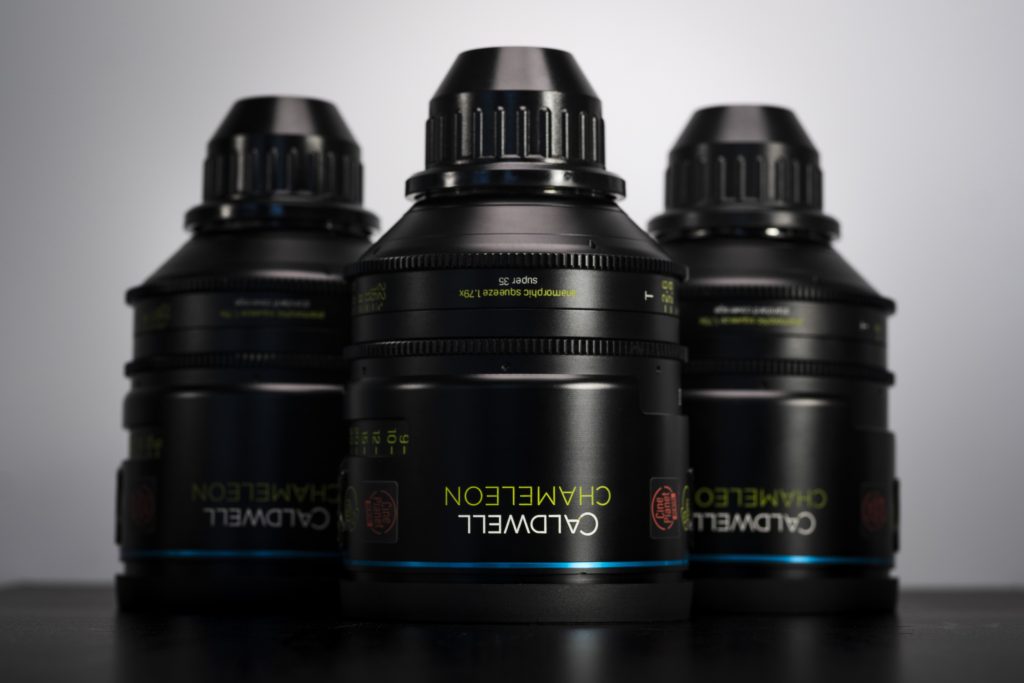
Caldwell Chameleon is a modern anamorphic lens family designed by renowned optical engineer
Brian Caldwell, built around a contemporary reinterpretation of Wallin-type anamorphic
architecture. Rather than relying on traditional cylindrical anamorphic elements, the Chameleons
employ a prism-based de-anamorphosing system, inspired by a concept originally developed by
Walter Wallin. This approach allows for greater optical control, efficiency, and consistency across
the image.
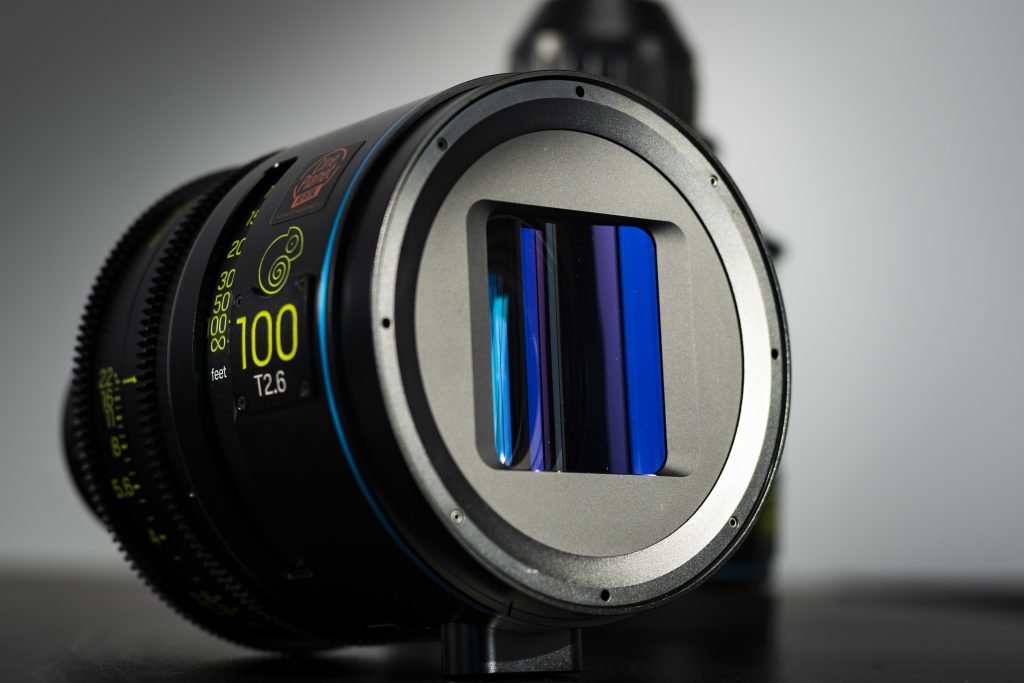
The Wallin-type design replaces complex cylindrical groups with a prism-style anamorphic
structure, enabling the squeeze ratio to be defined and maintained with higher precision.
Historically, this architecture offered a simpler and more cost-effective path to anamorphic imaging
while improving frame uniformity. In the Chameleon lenses, the concept is fully modernized for
digital cinema sensors, combining the inherent strengths of the Wallin approach with
contemporary optical materials, advanced coatings, and tight manufacturing tolerances.
At the core of the system is a distinctive 1.79x squeeze ratio, intentionally chosen as a modern
alternative to the traditional 2x anamorphic standard. This reduced squeeze is better aligned with
today’s sensor dimensions, preserving resolution and minimizing excessive cropping while still
delivering unmistakable anamorphic characteristics such as oval bokeh, cinematic perspective
compression, and strong subject separation. Instead of forcing a vintage format onto modern
cameras, Chameleons are designed around how digital cinema cameras are actually used today.
The lenses are optically optimized for Super 35, while providing physical coverage for full-frame
sensors, offering significant flexibility across formats. When pushed beyond their intended Super
35 image circle, certain focal lengths may exhibit softness and optical aberrations toward the
extreme edges of the frame. These traits result from intentionally controlled spherical aberration,
not focus inaccuracies, and serve as expressive tools—subtly emphasizing the image center and
naturally guiding the viewer’s attention toward faces and narrative detail.
For productions requiring a cleaner, more neutral image, Caldwell also offers full-frame-optimized
counterparts with improved edge performance and greater uniformity. Many cinematographers
mix Super 35 and full-frame versions within the same kit, choosing lenses based on emotional
intent rather than purely technical constraints—cleaner optics for wide or architectural shots, and
more character-driven lenses for intimate or dramatic moments.
Thanks to the Wallin-type prism architecture, Chameleon lenses maintain strong control over
chromatic aberration while preserving the dimensional, organic qualities associated with
anamorphic cinematography. Distortion is carefully managed, vertical breathing is present but
refined, and common anamorphic artifacts such as “mumps” are deliberately avoided. The result is
an image that feels expressive and cinematic without becoming unpredictable or difficult to manage
on set.
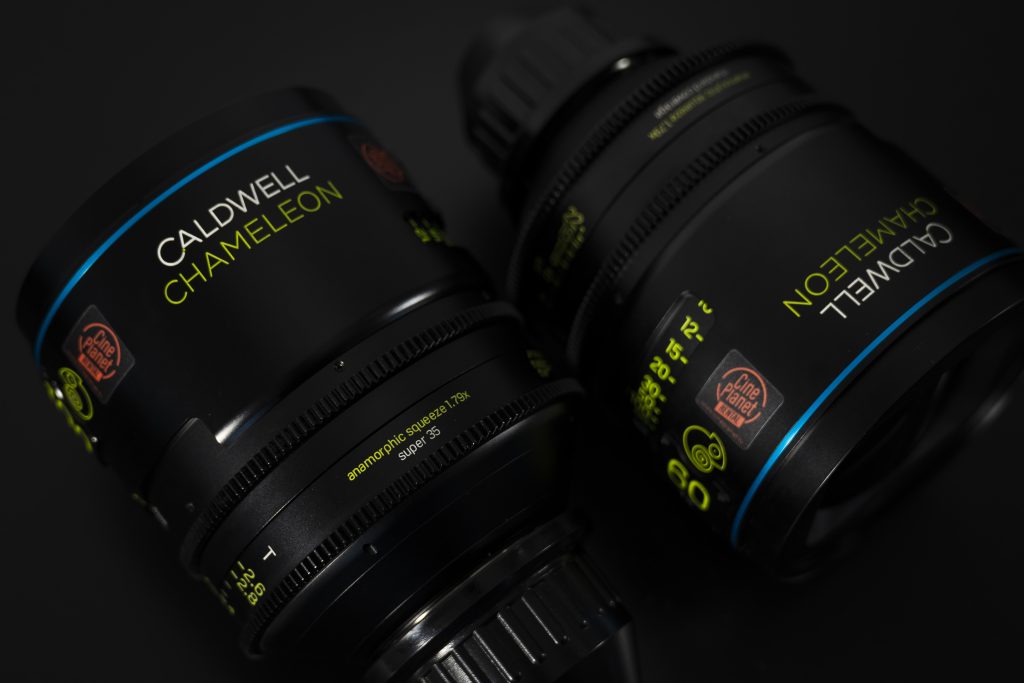
Mechanically, the Chameleons are built as true cinema lenses. All focal lengths share the same
close focus distance and identical physical dimensions, allowing fast lens swaps, consistent rig
balance, and streamlined on-set workflows. Focus and iris mechanics are smooth, precise, and
repeatable, supporting professional focus pulling. Despite their solid construction, the lenses remain
compact enough for handheld, gimbal, and lightweight cinema setups.
Caldwell Chameleon lenses are widely used across high-end narrative, commercial, and virtual
production environments, including LED volume and VR-based productions, where controlled
anamorphic behavior and predictable performance are essential. Their design philosophy has made
them a frequent choice on large-scale studio projects and advanced virtual stages, including major
franchise productions within the broader Star Wars / Mandalorian virtual production ecosystem.
Designed for filmmakers who value intentional imperfection, format flexibility, and optical
character as storytelling tools, Caldwell Chameleon lenses offer a compelling alternative to both
vintage rehoused optics and ultra-clinical modern anamorphics—positioned squarely for narrative
cinematography where mood, depth, and emotional texture matter most.